
The 2026 scenario goes like this: you try to pay tuition, rent, or just send a transfer, and instead of a payment confirmation you get a questionnaire. Where is the money from, what do you do for a living, what's your tax status, how long are you planning to stay in Georgia. The amount can be trivial: Tbilisi chats have discussed a questionnaire triggered by a payment under 100 lari.
The wave of compliance requests, limits and account freezes at Georgian banks is the banking story of the year for relocators and freelancers with an IE. There's plenty of panic around it and little explanation: banks don't comment on their decisions, and search results are dominated by articles about opening an account rather than keeping it.
Here is the mechanics: which law sits behind the bank's questions, what exactly a bank can do to your account, which operations most often trigger a review, and which document pack closes most questions. As always, this is a practice-based walkthrough, not legal advice: if your account is already frozen, the endgame strategy should be built around your specific situation.
Quick answer
Georgian banks are required by the anti-money-laundering law to vet their clients: assess each client's risk before opening an account and periodically throughout the relationship. In 2026 practice this means questionnaires, source-of-funds document requests, limits and temporary freezes, most often after recurring unexplained inflows, P2P activity or transfers involving crypto exchanges. A bank's request is not an accusation: a calm reply with documents resolves most cases. Opening an account is covered in a separate guide; the tax side of crypto is in our cryptocurrency guide.
Why the bank asks: what's behind the questionnaire
Behind every questionnaire stands Georgia's law on Facilitating the Prevention of Money Laundering and Terrorism Financing. A bank, in the law's terms, is an "obliged entity," and not asking is simply not an option it has. The core duty is stated directly:
Подотчетное лицо обязано <…> осуществлять идентификацию клиента и его верификацию, основываясь на надежном и независимом источнике; осуществлять идентификацию бенефициарного собственника и принимать разумные меры для его верификации.
— Article 10 of the law, matsne.gov.ge, edition in force since 01.04.2026 (from the official Russian version; in English: the obliged entity must identify the client and verify them against a reliable, independent source, and identify the beneficial owner, taking reasonable verification measures)
The key point: verification is not a one-off. The law requires risk assessment "before establishing business relations and, with appropriate regularity, in the course of business relations and when material circumstances related to the client change" (Article 12, our rendering). That's why a questionnaire can land after a year of quiet: the pattern of your inflows changed, so your risk profile changed.
Some thresholds are written into the law explicitly: cash transactions and linked transactions above 30,000 GEL automatically require preventive measures. And the Financial Monitoring Service can, by written order, suspend a suspicious transaction for up to 72 hours, regardless of the amount (Articles 11 and 36).
Since 2022 there's an external layer on top: Georgian banks operate under close attention from international regulators and correspondent banks, and the price of a mistake for them is their dollar and euro correspondent relationships. Tighter checks are how they keep that risk from materializing.
What the bank can do: the ladder of measures
In order of escalation:
| Measure | What it looks like | What it means |
|---|---|---|
| Questionnaire | in-app survey or a call: status, occupation, income sources | scheduled profile refresh, standard routine |
| Document request | asked to substantiate a specific incoming transfer | a trigger fired on that operation |
| Frozen operation | the payment hangs "under review," money neither sent nor returned | manual review; suspension up to 72 hours is possible |
| Limits | transfer or withdrawal caps until income is confirmed | unconfirmed profile — the bank cuts volumes |
| Returned transfer | an incoming transfer sent back to the sender | the bank didn't accept the source explanation |
| Account closure | notice of termination of service | the bank exited the relationship; it isn't obliged to explain |
How it feels in real life, from a March 2026 discussion on r/TbilisiStudentLife:
someone i know got a huge ass questionnaire about their status in the country, tax residence, what they do, etc. while trying to do a simple payment (less than 100 lari). they gave up halfway through
Abandoning the questionnaire halfway is the worst strategy available: an incomplete profile is itself the reason for limits.
What triggers a review most often
Banks don't disclose their exact algorithms, and even long-time residents admit as much:
It's normal yes, some nationalities get it more than others and opaque algorithms / risk scores trigger it. <…> if you're not doing anything sketchy just answer honestly.
Still, the recurring red flags are well established across practice:
- Recurring inflows with no clear basis. Monthly person-to-person transfers with no contract read to a bank like undeclared employment or transit.
- P2P activity. Frequent in-and-out card transfers with different people is a textbook financial-monitoring pattern, even if to you it's just "a friend paying back rent."
- Transfers to and from crypto exchanges. An inflow from Binance or a withdrawal to OKX will almost certainly raise a source question. Georgia's crypto tax regime is lenient, but bank compliance lives its own life (full breakdown here).
- Cash around the 30,000 GEL threshold. The threshold is written into the law; cash deposits, split amounts, and "deposited today, transferred tomorrow" look bad.
- A sharp change in account behavior. A year of silence, then ten inflows from three jurisdictions in a week.
- Words not matching transactions. The questionnaire says "living off savings" while a salary-shaped transfer arrives monthly.
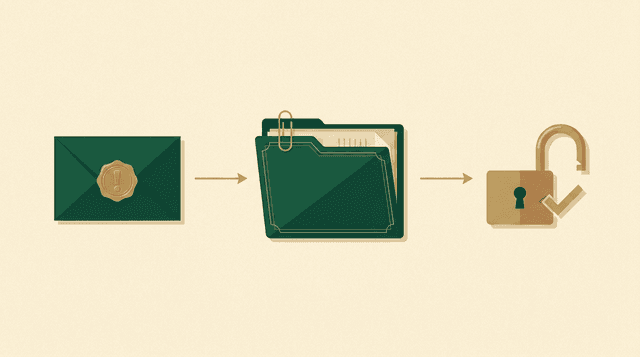
A request arrived: the action sequence
- Don't ignore it, don't postpone it. The request has a deadline; silence is read as impossibility of verification, which is legal grounds for the bank to wind down the relationship.
- Understand what's being asked. Asked about a specific transfer, answer about that transfer; asked about your profile in general, update the questionnaire completely. Don't volunteer more than was asked.
- Collect documents that match the question. Client contracts, invoices, IE registration extract, tax declarations. For personal amounts: property sale agreements, income statements, inheritance documents.
- Reply as one package. Papers trickling in one by one stretch the correspondence and the timeline. Documents not in Georgian or English are best accompanied by a translation; notarized translations are a normal part of the pack here.
- If the decision is negative, get it in writing. Ask for an official response: it's the basis for going to another bank or building an appeal. Arguing with a teller is pointless; the decision isn't theirs.
What the bank wants from your explanation was put well in an r/Sakartvelo thread about a large transfer:
You need to be able to convince the banks you are not money laundering or involved in crime. <…> If they don't like your answers they'll send the money right back.
The document pack, prepared in advance: a freelancer's checklist
A review goes an order of magnitude easier when the pack exists before the question, not after. Our standard set for clients:
| Document | What it proves to the bank |
|---|---|
| IE registration extract + small business status certificate | the activity is legal |
| Contracts with main clients | origin of recurring inflows |
| Invoices for recent months | amounts tied to contracts |
| Monthly rs.ge declarations and 1% payment confirmations | the income is declared |
| Tax clearance statement | clean standing with the budget |
| For large personal sums: sale agreements, inheritance, gift documents | source of one-off receipts |
This is where tax discipline converts directly into banking calm: a freelancer whose every inflow is covered by an invoice and included in the monthly declaration answers any request in one evening.
TBC, Bank of Georgia, and the fallback options
The TBC and Bank of Georgia duopoly covers most relocators, and their review practices are similar: onboarding questionnaires got longer, profile refreshes became regular, and both treat crypto and P2P warily. There is no reliable statistic on "which bank is more lenient": decisions are individual and depend on the client's profile more than the bank's brand.
More useful is remembering the choice isn't limited to two:
There are more than two banks. You have Liberty Bank and Basis Bank and you have Pro Credit. So if you want to change banks you can.
A working 2026 configuration is not keeping everything in one bank: the IE account in one, personal in another, plus Wise or an equivalent as a buffer for international payments. Then a blocked channel is an inconvenience, and the plan survives. Non-resident onboarding requirements and a bank comparison are in the dedicated article.
The honest block
- The bank may never explain. The law doesn't require disclosing decision logic, and for suspicious-transaction handling it explicitly forbids tipping the client off. Sometimes you will never get an official "why."
- Timelines are unpredictable. A review takes anywhere from a day to weeks; the money can be inaccessible meanwhile. Don't schedule large payments right up against a review.
- A perfect document pack guarantees nothing. It sharply raises your odds, but the final call belongs to the bank, and no one can force it to serve you.
- We don't "fix things with the bank." We help assemble the right pack, structure the correspondence and the profile, which is the legal help that is usually sufficient. Intermediaries promising to "unblock for a percentage" are a red flag pointed at you.
Frequently asked
The bank blocked my card without warning. Is that legal? Suspending operations pending review is within the bank's duties under the law, and it isn't allowed to warn you when reviewing a suspicious operation. What happens next depends on how you respond to the request.
How long can the bank hold my money frozen? A formal transaction suspension ordered by the Financial Monitoring Service is capped at 72 hours, but a bank's internal review has no statutory clock: in practice anywhere from a couple of days to several weeks.
Do I have to answer the questionnaire if I only have a personal account, no business? Yes. Verification applies to all clients, not just entrepreneurs. Ignoring the questionnaire is the shortest route to limits.
Is it true that transfers from crypto exchanges are banned? There's no ban, but such inflows almost always get a manual review. Exchange statements, trade history and declared income help. Keeping crypto flows and your main operating account in the same place is a bad idea.
My transfers were limited until I confirm income. What do I bring? The standard pack: proof of employment or IE registration, contracts, declarations, income statements. Once confirmed, limits are usually lifted, though timelines vary by bank.
The bank returned an incoming transfer to the sender. Is the money gone? No, it goes back to the sender. Next: find out the return's stated reason, assemble the source documents, and agree on a re-send, or use a different channel.
My account was closed. Do I get the balance back? Yes, the balance is yours: the bank transfers it to details you provide. Closure at one bank doesn't formally bar you from another, but with a closure in your history, prepare the document pack before the second attempt.
Does a residence permit or tax residency protect against checks? Not entirely, but resident status and a clear tax trail noticeably lower your risk profile. How Georgian tax residency works is covered separately.
Instead of a conclusion
A compliance request is a question that a healthy business already has the answer to. A transparent income structure, declared turnover and a folder of contracts close most reviews in a single exchange.
If the request has already arrived and the folder doesn't exist, we'll help assemble the pack, bring the declarations up to date and structure the conversation with the bank: Telegram @GeoExpertsSaqartvelo, WhatsApp +995 551 278 585. The first consultation is free.
Ready to start?
Book a consultation or message us: we will tell you whether this service fits and how we would do it for your case.